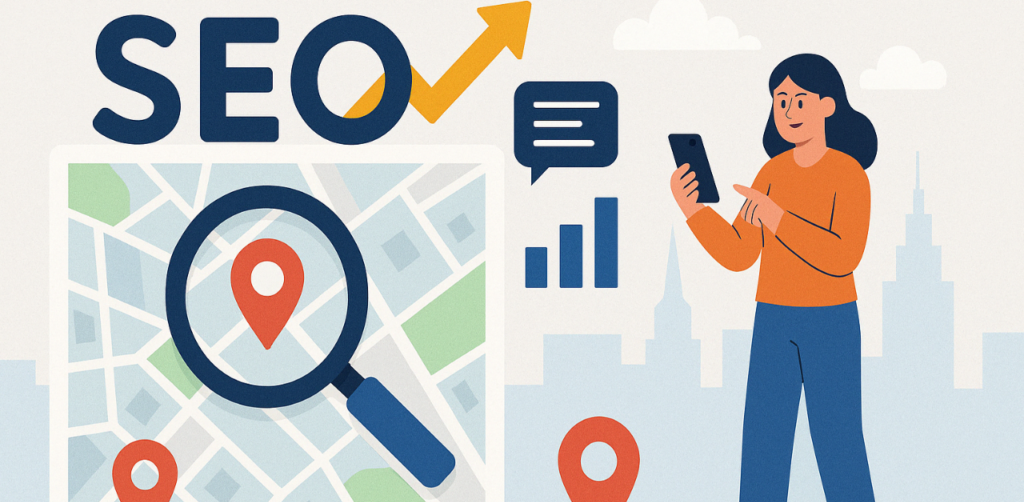

A law firm can lose strong local cases before intake even starts. Someone searches “personal injury lawyer near me,” sees the map pack, scans reviews, checks hours, taps a profile, and calls the firm that looks most trusted. That decision can happen in under a minute. For many law firms, the fastest path to more local visibility is not another broad blog post or more Google Ads. It is a tighter Google Business Profile, stronger local proof, and a cleaner link between the profile, the website, and the intake pipeline.
At Web Search Marketing, we often see this pattern in legal marketing, especially among personal injury firms that want organic leads rather than pay for every click. Google says local ranking is shaped by relevance, distance, and prominence, and a complete, accurate Business Profile can improve visibility in local search results.
This article outlines a practical 90-day local SEO sprint for law firms looking to win map pack spots without chasing vanity metrics. It is built for firms asking how to optimize Google Business Profile for lawyers, why a law firm is not showing on Google Maps, how to rank a law firm in Google Map Pack, and how long it takes for a law firm to rank on Google Maps. The goal is to give Google enough local proof, site context, and client-facing trust signals to rank the right firm for the right local intent.
Why Do Some Law Firms Show Up in the Map Pack While Others Stay Buried?
Most firms do not have a ranking problem in just one place. They have a relevance, proof, or trust problem across the full local search setup. Google’s own guidance says local ranking is determined by:
- Relevance
- Distance
- Prominence
Relevance means the Google Business Profile (GBP) clearly matches what the searcher is looking for. Distance is tied to the searcher’s location or the city named in the query. Prominence reflects how established and visible the business appears online. That includes reviews, website signals, and broader mentions across the web.
For law firms, this gets more specific. A personal injury lawyer profile that only says “Attorney” in the business description, has a thin services list, weak photos, few Google reviews, and no strong practice areas on the site, is harder for Google to trust for searches tied to car accidents, settlement timelines, or city-based injury claims.
A firm can also hurt local relevance by using the wrong primary or secondary categories, weak service areas, poor citation building, or a business name that does not match its real-world branding. Google’s business representation guidelines are clear that the profile should reflect the actual business and real-world details.
That is why local packs are rarely won with a one-page edit. They are won by cleaning the full local footprint so the search engine sees a clear match between the firm, the city, the services, and the proof behind them.
What Should a Law Firm Fix in Week 1 Before Chasing More Visibility?

Week 1 is about cleanup. Most law firms want faster local ranking, but speed comes after accuracy.
Start with the Google Business Profile itself.
Make sure the business name, address, phone number, website link, hours, and services list are up to date. Add the direct link to the right contact or location page if the home page is too broad. Keep the primary category tight. Use secondary categories only when they align with the actual services. Add practice areas in the services list and business description in plain English. Personal injury firms can mention car accidents, truck accidents, wrongful death, and related case types if those pages exist on the site. Google says complete business info helps profiles show up for relevant local search.
Tighten local proof
Ask recent clients for Google reviews in a compliant way. Do not offer incentives. Google’s review guidance encourages businesses to ask for reviews and respond in a conversational, non-promotional way. That matters for law firms because strong review text often adds local relevance, service clues, and authority signals that help both searchers and Google understand the firm. Reviews that mention communication, case type, office staff, and city names can help more than short five-star posts with no detail. Firms also need a plan for negative reviews. A calm, factual response can protect trust and show the firm is active.
Check local directories and major platforms
The firm’s name, address, phone, and site URL should match across Apple Maps, legal directories, and structured citations. Inconsistent listings do not always tank rankings, but they can muddy local proof. For professional services like law firms, consistency still supports local visibility.
Set up clean tracking
Use a tracking number only if call tracking is configured without breaking local citation consistency. Connect Search Console and analytics so the team can separate organic traffic, map pack actions, and money pages that produce signed cases or qualified consultations. Many firms say they want more visibility. What they need is better business value from local intent.
How Can a 90-Day GBP Sprint Build Local Proof That Google Can Trust?
| Sprint Phase | Main Goal | What To Do | Why It Matters |
| Days 1-30 | Fix the profile and strengthen the local context | Update the Google Business Profile with accurate services, service areas, categories, business description, and fresh photos of the office, attorneys, signage, and staff. Revise the location page so the profile points to a strong landing page. Add structured data, tighten meta descriptions, improve mobile usability, and build or refine core practice area pages such as personal injury, car accidents, truck accidents, and wrongful death. | This gives Google clearer relevance signals and gives potential clients a stronger first impression. Google says complete and accurate Business Profile information can improve visibility in local search. |
| Days 31-60 | Build recurring local proof | Publish weekly GBP posts tied to real client concerns, such as rear-end crashes, police reports, or settlement timelines. Ask for more Google reviews, respond to reviews, clean up local directories, and work on citation building across major platforms like Apple Maps and legal directories. | This phase adds freshness, trust, and stronger local proof. Reviews, active profile management, and citation consistency help reinforce law firms’ local relevance. |
| Days 61-90 | Increase prominence and topical authority | Publish supporting blog content around local search questions. Use internal linking and descriptive anchor text to connect blog posts to money pages and practice area pages. Add contextual links, earn media mentions, and build referring domains through local partnerships, legal groups, and digital PR. | Google evaluates more than the profile alone. Website quality, local proof, and prominence signals all support stronger map pack performance. |
| Across the Full 90 Days | Improve AI Overview readiness | Write content that first answers direct questions, uses a clear page structure, and adds useful follow-up details tied to local intent. Keep pages concise, factual, and easy to scan. | Google says AI Overviews are designed to help people get quick answers and explore a wider range of sources. Clear, question-based content can support better AI search visibility. |
Which Site Signals Turn a Strong GBP Into Real Map Pack Momentum?
A profile cannot carry a weak site for long. If the GBP is the storefront, the website is the case for trust.
Build your location page
It should not be a thin one-page placeholder stuffed with city names. It should explain the office, service areas, attorney access, intake process, and the practice areas tied to that office. Add unique local proof, such as nearby courts, neighborhoods served, or city-specific claim issues, but keep every statement factual. Then support that page with practice area pages built for conversion-focused law firm SEO. This is where SEO for law firm websites meets attorney lead generation SEO.
Build a sound keyword strategy
Map local intent terms to the right page type. “Personal injury lawyer Las Vegas” belongs on a money page. “How long does the GBP ranking take for law firms?” fits a blog post. “Why my law firm is not showing on Google Maps” works as a support article that links back to law firm SEO services. This structure helps with local SEO, organic rankings, and topical authority simultaneously.
Technical SEO still matters
Make sure the site is crawlable, quick on mobile, and easy to understand. Use internal linking to connect practice areas, attorney bios, FAQs, and local pages. Structured data can help search engines better understand the site. Clean title tags and meta descriptions still matter for search results even as AI overviews expand. Google’s Search guidance remains focused on useful, discoverable pages that help people complete tasks.
For firms running campaigns, PPC and SEO for lawyers should also support each other. Strong ad copy can show which terms convert. Search Console can show which queries already bring impressions. Together, they can shape content priorities without making Google Ads the center of the whole strategy.
Turn Local Visibility Into Signed Cases
Local search is often the first trust test a law firm faces. Before a prospect reads a case result or speaks with intake, they are judging the firm from a small set of signals on Google Maps. That moment is easy to miss, but it carries real business value. A firm that treats its Google Business Profile as part of its full client acquisition system can create a better first impression, attract stronger local-fit leads, and build a steadier source of organic visibility over time.
At Web Search Marketing, we help law firms turn local search into a cleaner path from discovery to signed cases. If your firm wants a focused plan to improve map pack performance, strengthen local proof, and secure more qualified consultations, schedule a consultation with us.